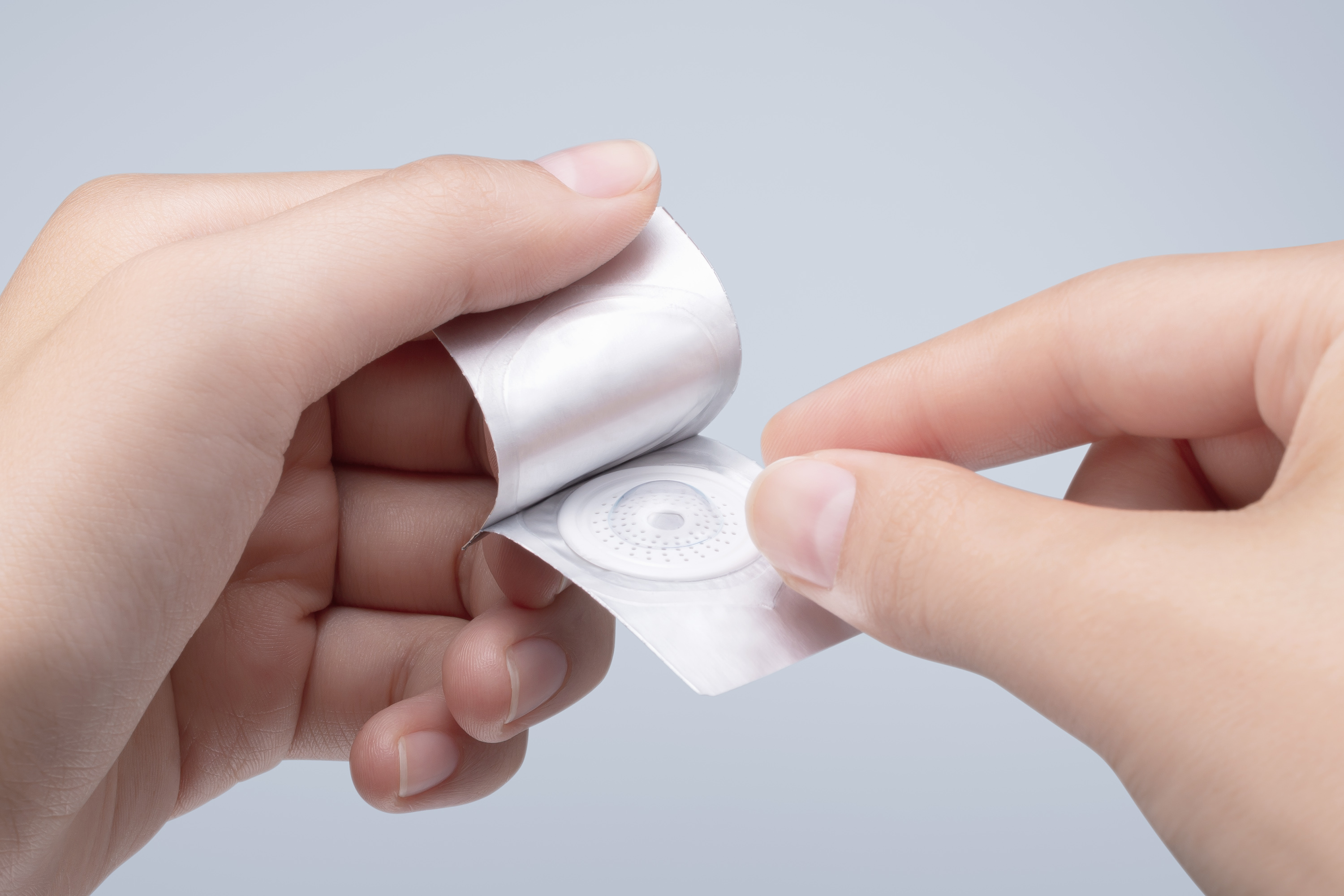
Contact lens-related bacterial infections are increased by bacterial adhesion to the inner surface of the lens and improper handling. Although contact lenses are convenient vision correction devices, improper daily care and handling methods can compromise eye health. This article explains the causes of bacterial contamination during contact lens wear, measures to reduce this risk, and the latest packaging technologies.
Causes of Bacterial Infection in Contact Lens Wear
One of the primary causes of bacterial infection during contact lens wear is the transfer of bacteria from fingers to the inner surface of the lens during handling.
When severe ocular complications such as corneal infiltrates occur, bacteria such as Pseudomonas aeruginosa and Serratia marcescens are frequently involved, increasing the risk of hyperemia and corneal ulcers. These risks may be associated with contact lens wear. With conventional contact lens packaging, fingers often come into direct contact with the "inner surface" of the lens (the side touching the eye) during removal.
Furthermore, because tear exchange under the lens is extremely low during contact lens wear, once dirt or bacteria adhere to the inner surface, they are unlikely to be washed away by tears and tend to remain trapped on the eye surface.
Methods to Reduce Bacterial Adhesion to the Inner Lens Surface
The risk of bacterial infection from contact lenses can be reduced through packages designed to minimize contact with the inner surface, combined with proper hand washing.
The foundation for reducing ocular infection risk is thoroughly washing hands with soap and drying them with a clean towel before touching contact lenses. In addition, "touchless design" packaging has recently emerged, engineered to prevent touch to the inner surface when removing the lens from the package. Because fingers do not touch the inner side directly, combining this design with hand washing effectively lowers the risk of introducing bacteria.
Effects of Packaging Design Shown in Clinical Research
Clinical research demonstrates that packaging designed to avoid touching the inner surface of the lens is an effective approach to reducing the risk of bacterial contamination.
A research team at The University of New South Wales (UNSW Sydney), led by Professor Fiona Stapleton from the School of Optometry and Vision Science, conducted a clinical study evaluating the impact of contact lens packaging design on bacterial contamination. Twenty-five contact lens wearers washed their hands, wore lenses for 45 minutes, and the inner surfaces of the sub-aseptically removed lenses were cultured.
The results showed that for hydrogel material lenses, the touchless design (Flat Pack) resulted in a 2-fold higher rate of zero bacterial contamination (increasing from 28% to 56%).
Comparison for Hydrogel Material
|
Package type |
No bacterial contamination |
|
SMART TOUCH™ Design |
56% |
|
Conventional Blister |
28% |
Multivariate analysis data also confirmed that lenses utilizing touchless packaging designs have an approximate 3-fold lower risk of lens contamination compared with conventional packaging.
Technologies and Products Designed to Reduce Bacterial Adhesion
SMART TOUCH™ is a packaging technology designed specifically to minimize contact with the inner surface of the contact lens.
This packaging is engineered so that upon opening, the inner surface of the lens (the side touching the eye) always faces downwards. Consequently, through a simple 4-step process ("Open, Pinch, Position, Apply"), wearers do not need to check the orientation of the lens and can insert it cleanly without touching the inner surface.
/Bacterial%20BLog%20-%20Flat%20Pack%20Opening-1.png?width=687&height=226&name=Bacterial%20BLog%20-%20Flat%20Pack%20Opening-1.png)
As a technological approach to the challenge of bacterial contamination, Menicon incorporates SMART TOUCH™ for the following:
Miru 1day Flat Pack: A daily disposable lens made from a hydrogel material housed in an ultra-thin flat pack.
FAQ
Q. What is SMART TOUCH™?
A. It is a proprietary packaging technology designed so that the inner surface of the contact lens (the side touching the eye) always faces downward upon opening. Because it allows lens insertion without touching the inner surface, it reduces the risk of bacterial contamination.
Q. Can infections be completely prevented?
A. No, infections cannot be completely eliminated. While touchless packaging technology significantly reduces the risk of bacterial contamination, maintaining eye health requires following eye care professional instructions, proper lens handling, and regular eye examinations.
Q. Is hand washing still necessary?
A. Yes, absolutely. Relying solely on technology is insufficient; thoroughly washing hands with soap and drying them with a clean towel before touching contact lenses remains the foundation of infection prevention.
Key Takeaways
- Bacterial adhesion to the inner surface of contact lenses increases the risk of eye infections.
- Packaging designed to reduce contact with the inner lens surface helps lower the risk of bacterial contamination.
- SMART TOUCH™ is a packaging technology engineered to enable lens application without touching the inner surface.
- Clinical studies report less bacterial contamination (reduced risk of contamination) compared to conventional packaging.
- Proper hand washing and appropriate lens management remain essential.
References
- Tan J, Siddireddy JS, Wong K, Shen Q, Vijay AK, Stapleton F. Factors Affecting Microbial Contamination on the Back Surface of Worn Soft Contact Lenses. Optom Vis Sci. 2021;98(5):512-517.
- Willcox MDP. Solutions for Care of Silicone Hydrogel Lenses. Eye Contact Lens. 2013;39(1):24-28.
- Szczotka-Flynn LB, Pearlman E, Ghannoum M. Microbial Contamination of Contact Lenses, Lens Care Solutions, and Their Accessories: A Literature Review. Eye Contact Lens. 2010;36(2):116-129.
Reviewed by: Menicon Clinical Affairs